Register for our upcoming events here
All you need to know
AQA
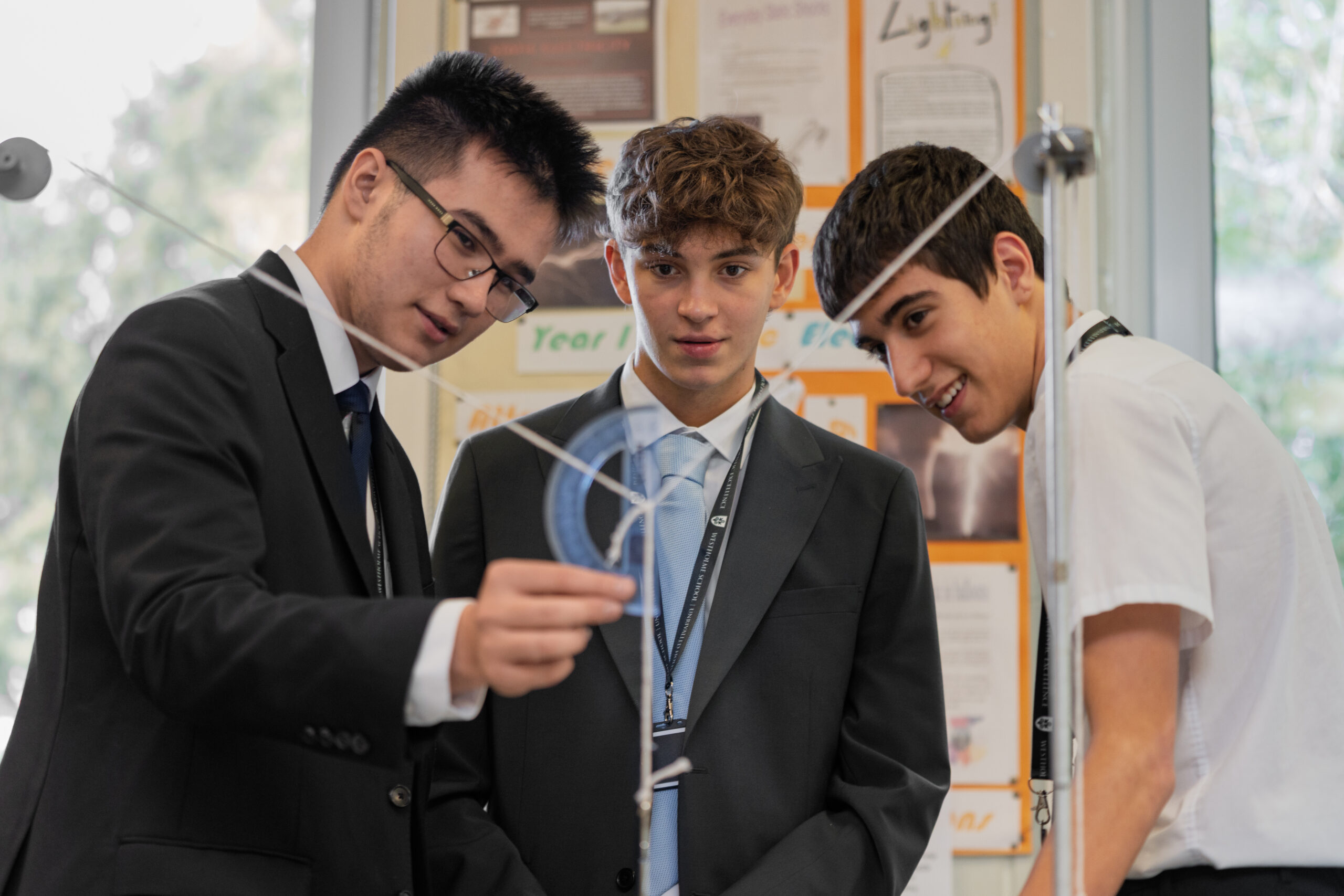
Physics is a very practical subject, and as such, pupils will carry out a significant amount of experimental work in order to research topics and investigate fundamental physical laws.
Grade 7 or above in GCSE Physics/Science or two 7s in Combined Science GCSE. Grade 7 or above in GCSE Maths
A Level Mathematics is not necessary, as extra skills can be taught as needed.
A Level Physics is a highly demanding course and as such it is essential that a student has a minimum of a Grade 7s at GCSE in both Physics/Science and Mathematics. A Level Mathematics is not necessary as any extra skills can be taught as needed. However, if you are considering taking Mathematics, a Mathematics with Mechanics option will provide a very useful overlap with the Mechanics section of the Physics course. The lessons feature a mix of theory and practice, with experimental work underpinning much of the concepts you will learn.
Physics qualifications are highly respected by a wide range of universities and disciplines. An A Level in Physics can lead to many things, including research, medicine, architecture, engineering, business and finance.
Medical Physics, Health Physics, Telecommunications, Microelectronics, Nuclear Power and Instrumentation, Cryogenics, Astronomy, Geophysics, Oceanography, Materials Science, Computing, Engineering, Meteorology, Environmental Physics, Aerospace Industry, Scientific Civil Service.